Plural Reality · AI for pre-deliberation reflection
Know where your group stands before the discussion begins
Cartographer (Baisoku Kaigi) is Plural Reality's tool for the moment before people deliberate. An AI asks each participant questions so they can put their own views, reasons and open questions into words. Cartographer then maps where the group agrees, where it is divided, and what people are not yet sure about.
Free to use for now. Hosts sign in with their email address, no password needed.

Featured in research
An example in DemocracyNext's Deliberative Muscles & AI
DemocracyNext's paper Deliberative Muscles & AI (July 2026) features Plural Reality's Cartographer as an example of a complementary use of AI for self-reflection: structured pre-deliberation prompts that ask participants to articulate their own values.
The paper describes how the tool has been used in deliberative processes in Japan. After an expert presentation and before small-group deliberation, assembly members first use Cartographer individually to reflect on what they think and what they do not yet understand. The outputs are then reviewed together on a big screen at each table.
How Cartographer works
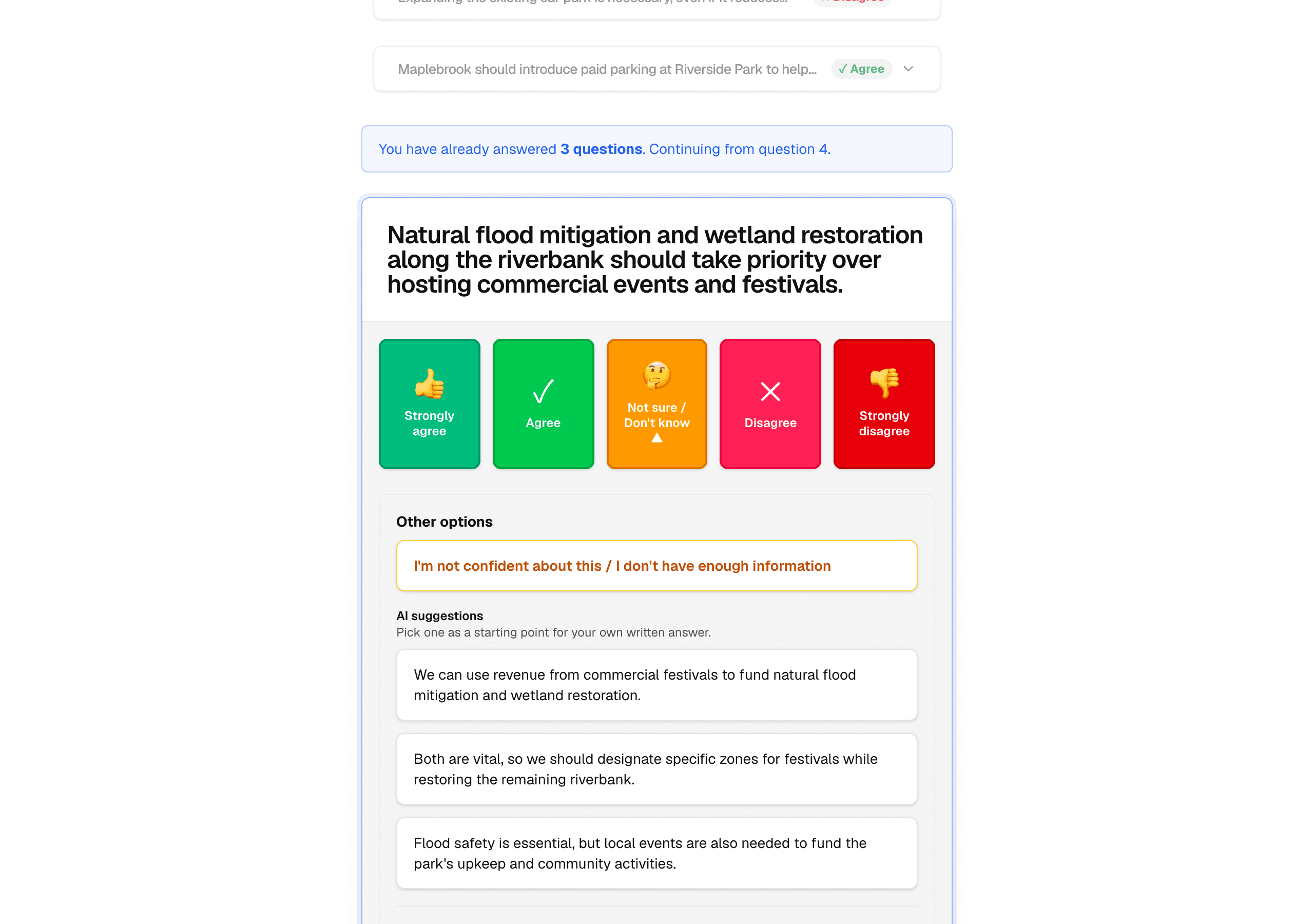
1. Each participant puts their view into words
Participants rate AI-generated statements on the topic, from strongly agree to strongly disagree. When they are not sure, the AI drafts positions they can start from, or they answer in their own words. Participants do not need an account.
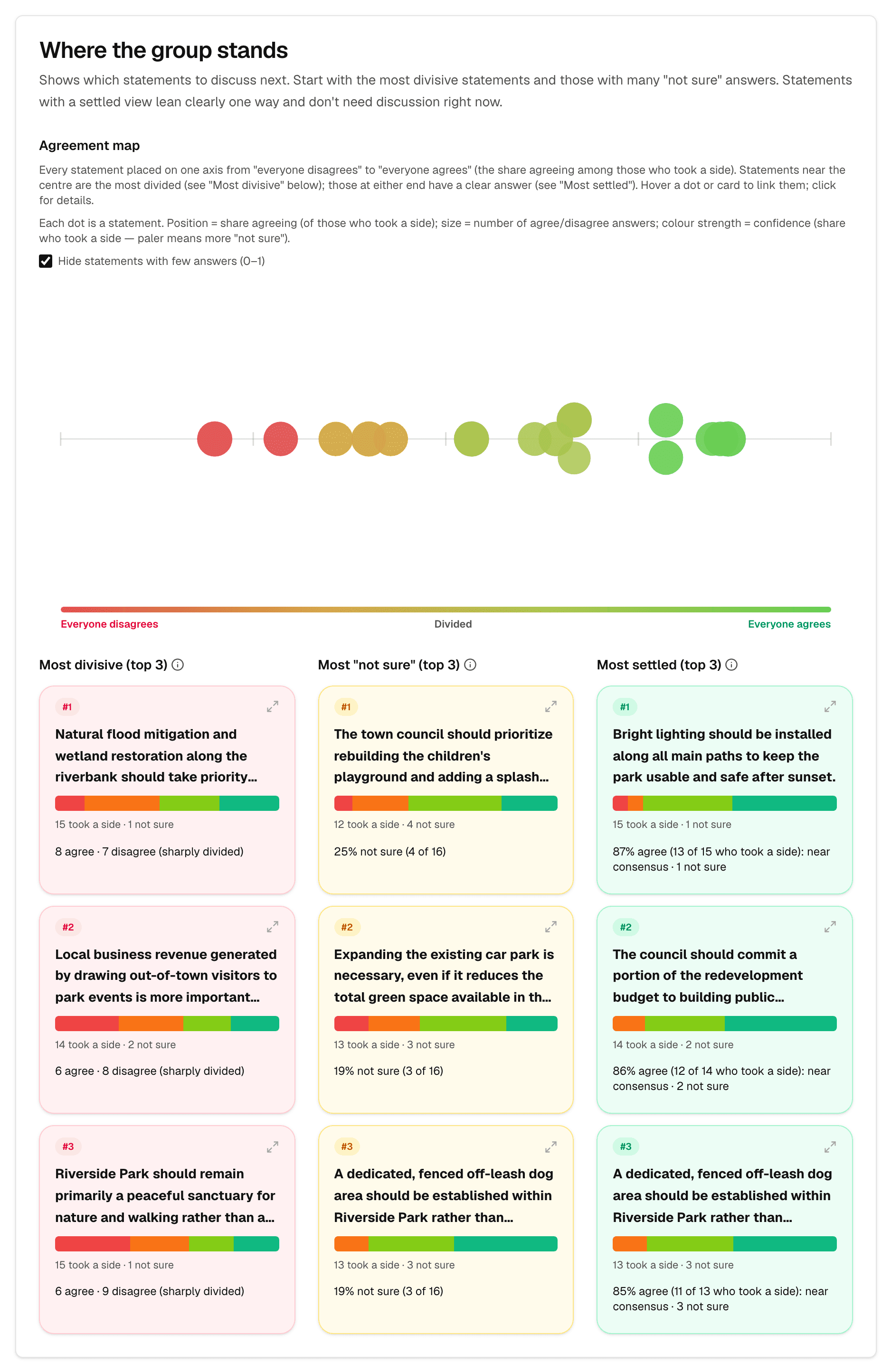
2. The group sees where it stands
The agreement map places every statement on one axis from “everyone disagrees” to “everyone agrees”, and lists the most divisive statements, those with the most “not sure” answers, and the most settled ones. The discussion can start from what actually needs discussing.
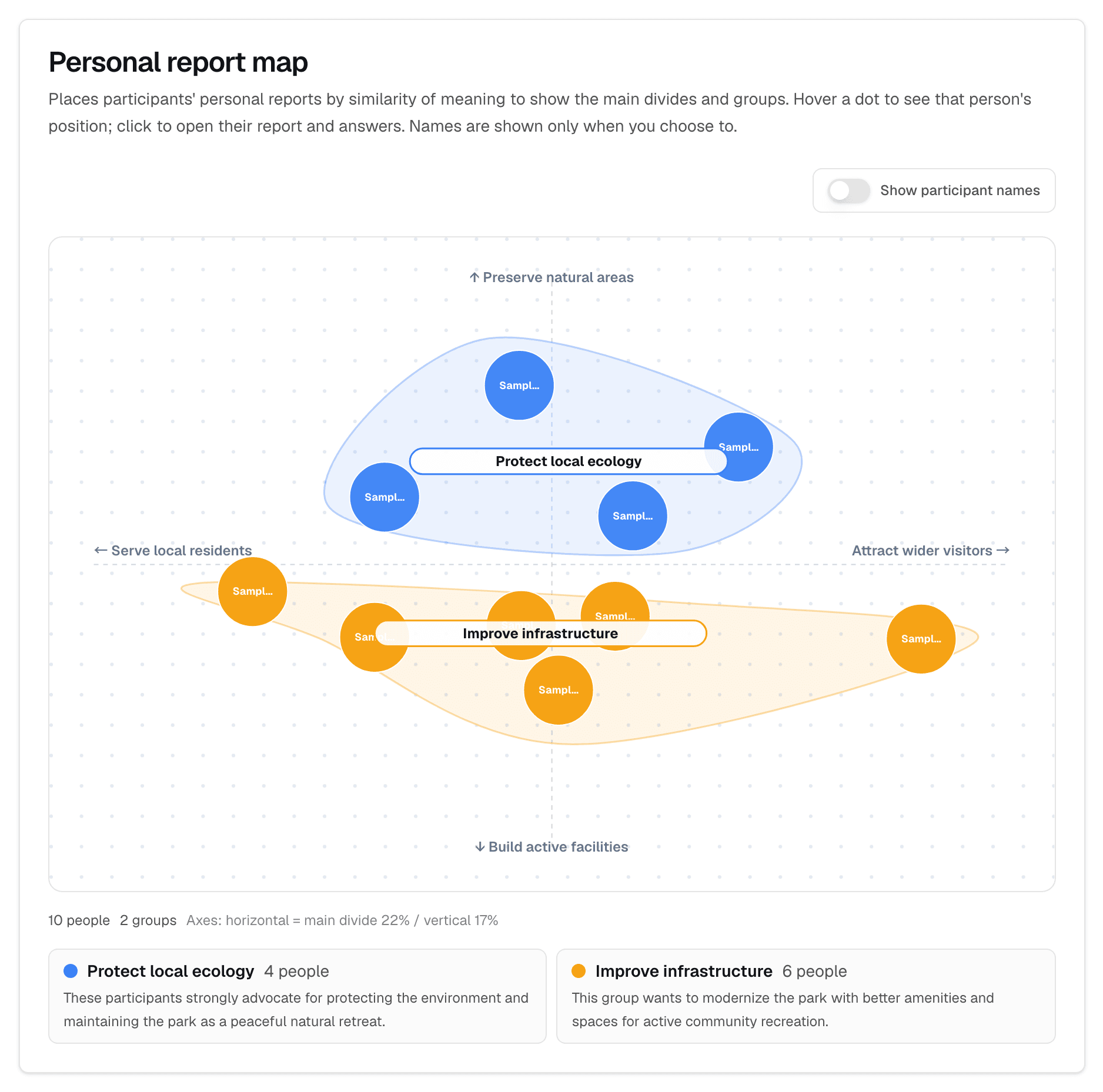
3. Groups of views become visible
The opinion map places participants by the similarity of their views and labels the groups it finds. Names stay hidden unless the host chooses to show them.
Reports for the host and for every participant
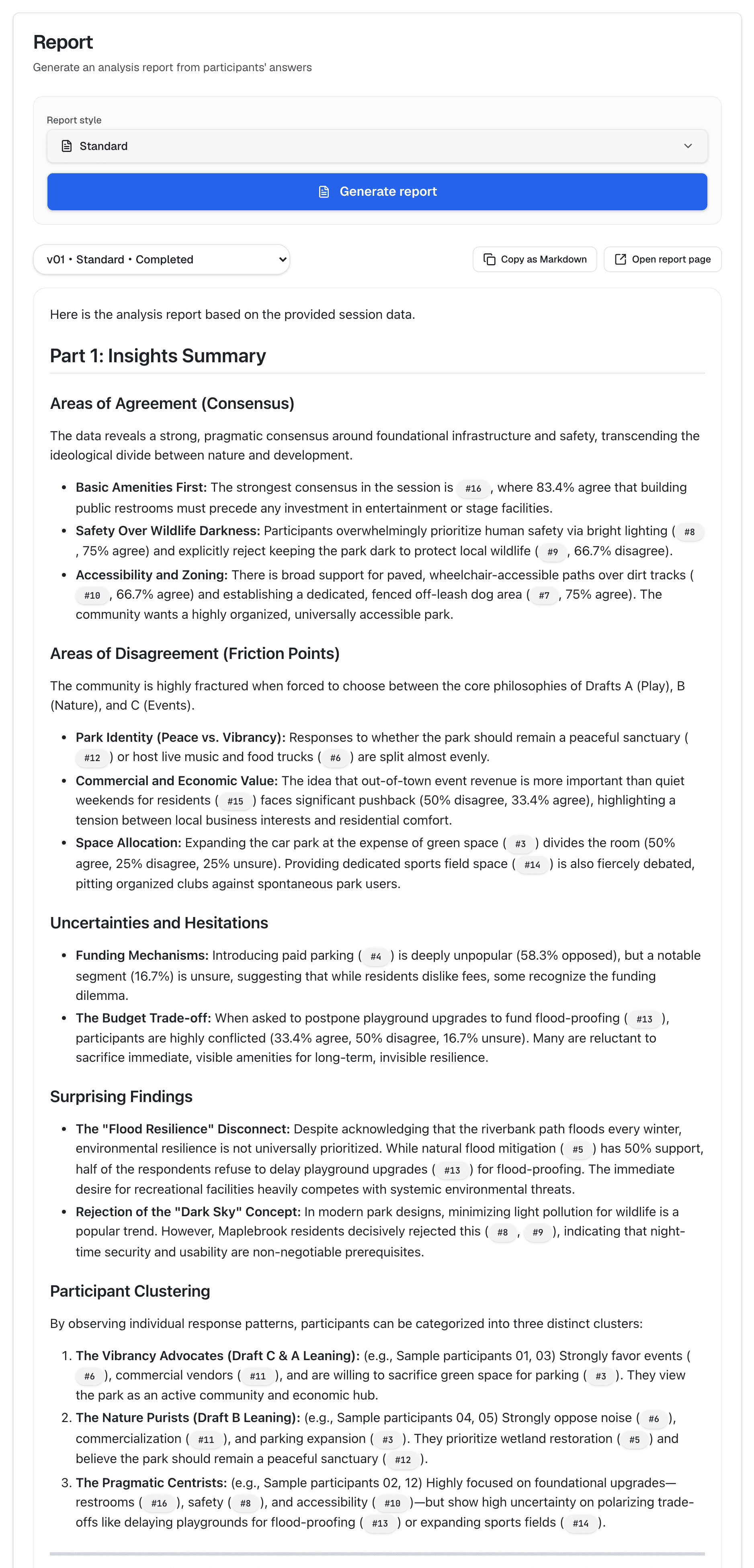
Analysis report for the host
An AI-written report on the areas of agreement, disagreement and uncertainty, surprising findings, and the groups of views.
Personal report for each participant
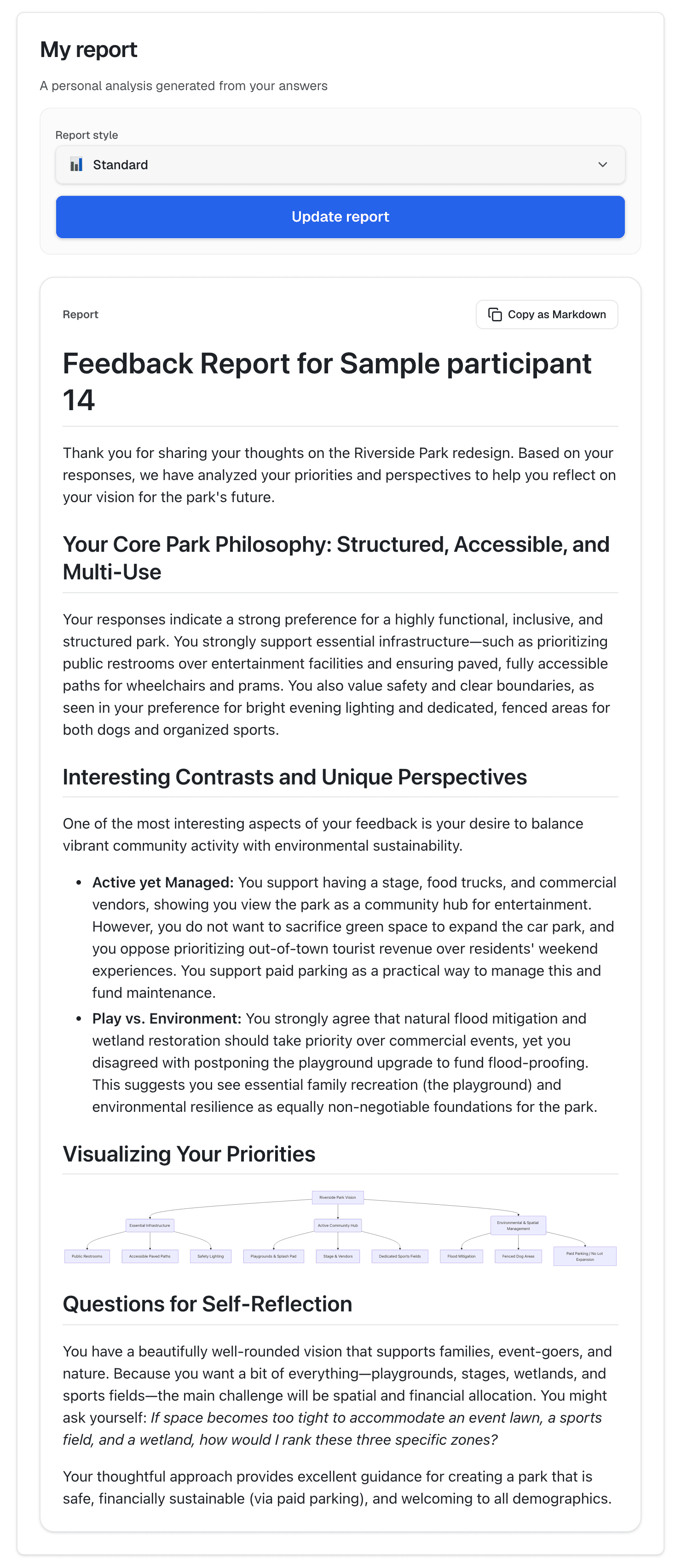
Each participant gets a short AI-written reflection on their own answers, to bring into the conversation.
Run a session from one dashboard
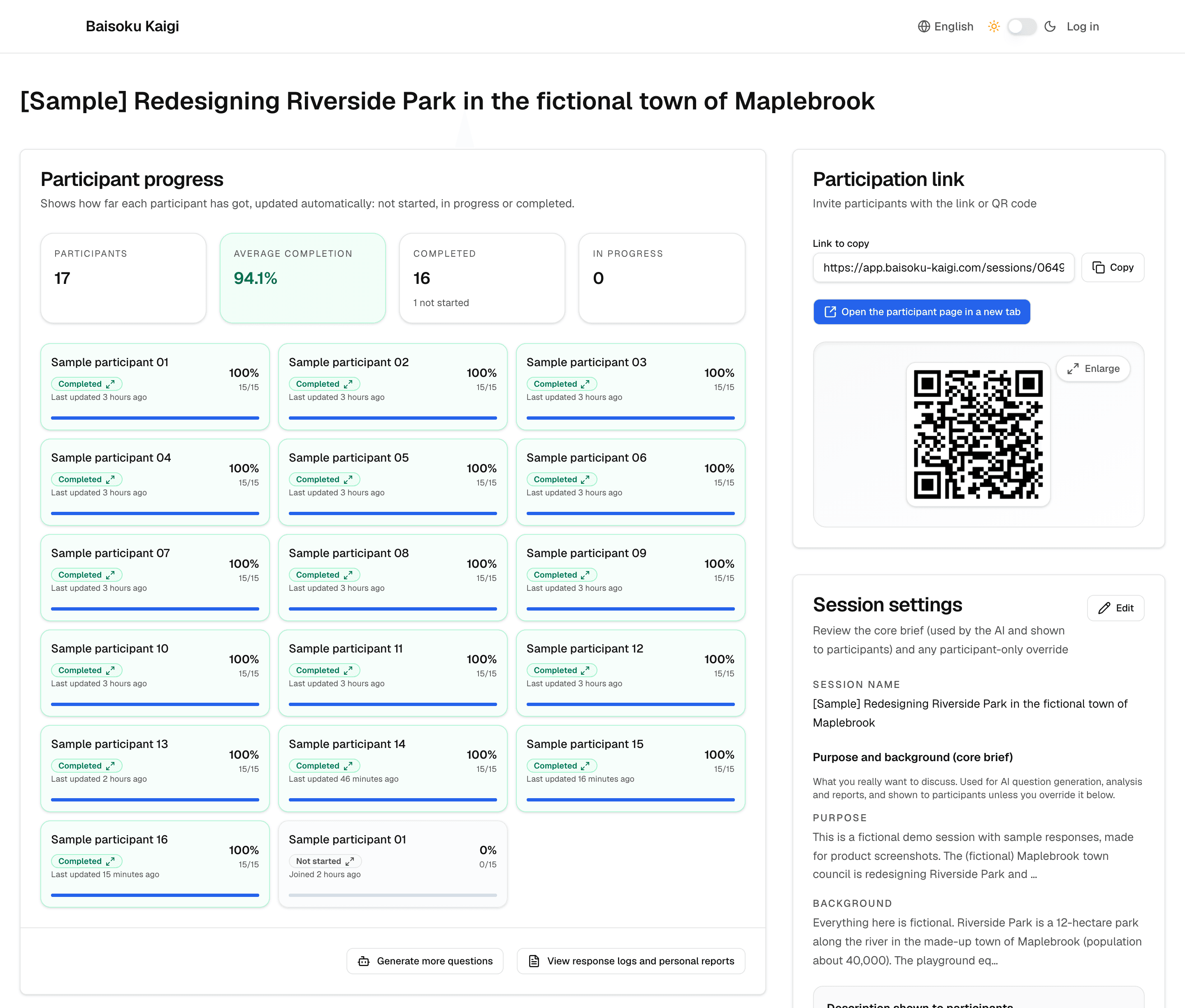
- Share a participation link or QR code with the group.
- Follow each participant's progress as they answer.
- Review every response and export the responses as CSV.
- The participant and host screens are available in English.
Where it has been used
Cartographer has been used in public deliberation and inside companies in Japan. Plural Reality publishes case studies on its website.
Read the case studiesTry Cartographer with your next group
Start a session yourself, or tell us about your process and we will show you how Cartographer could fit.
Questions about Plural Reality? Contact us